
SEO is not enough: why you need a GEO strategy
Brands need a new approach to appear in AI-generated answers.
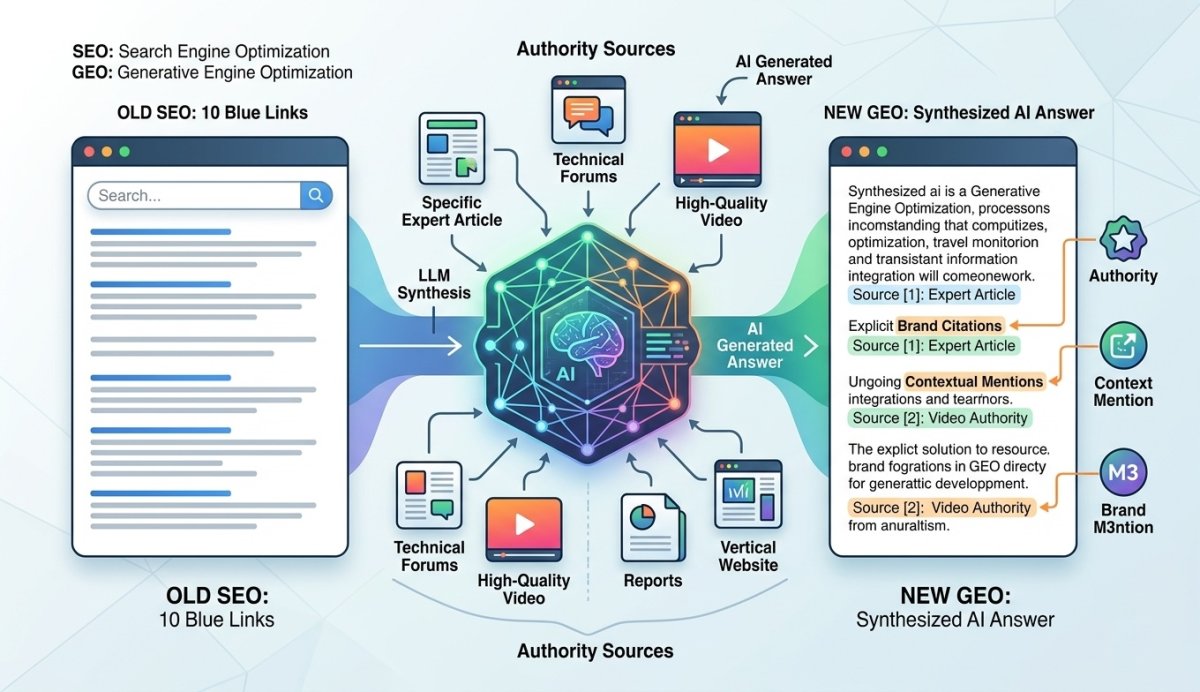
The context has changed
For over a decade, SEO has been the central discipline for earning online visibility. Ranking on Google meant existing on the internet. But something has fundamentally changed.
Users no longer search only on Google. Increasingly, they get direct answers from ChatGPT, Gemini, Perplexity, and other generative AI systems. These answers don't show "10 blue links" — they cite sources, mention brands, and synthesize information.
What is GEO
GEO (Generative Engine Optimization) is the discipline focused on making your brand appear, get cited, and be presented correctly in AI-generated answers.
It doesn't replace SEO. It complements it. But it requires a different approach:
- Brand authority: LLMs prioritize sources they recognize as authorities on a topic
- Contextual mentions: Being mentioned in relevant, high-quality content
- Video presence: YouTube is one of the most cited sources by AI systems
- Multi-source consistency: Being present across multiple media reinforces the signal
Why it matters now
Early studies show that brands appearing in generative AI answers capture a significant share of discovery traffic. And unlike traditional SEO, where you can optimize your own site, GEO requires presence in external media.
This is where an editorial infrastructure like Link To Media's makes the difference: owned media, real audiences, expert content across multiple verticals and languages.
Getting started
- Audit your current presence in AI answers
- Identify the topics and questions where your brand should appear
- Build a strategy for mentions in authoritative media
- Complement with video content (YouTube)
- Measure and adjust with AI mention tracking tools